Cognitive Health

Cognitive health is a sign of overall health.

While cognitive changes are often accepted as a normal part of aging, symptoms such as brain fog, poor concentration, and forgetfulness may indicate that key physiological systems are under strain. At SageMD we help identify and address these contributors which can be an important step toward restoring cognitive health.
Dementia risk
As life expectancy increases and the prevalence of dementia continues to rise, more individuals are living longer with advanced stages of neurodegenerative disease. For families and loved ones, this can be profoundly distressing—watching someone they care about gradually lose memory, independence, and connection. At the same time, many adult children and caregivers find themselves reflecting on their own health, wondering about their personal risk and what, if anything, can be done to protect their cognitive future.
Conventional medical care often offers limited opportunities for proactive cognitive assessment or prevention, particularly in the absence of a clear diagnosis. At SageMD, we believe these concerns deserve careful attention. We offer evidence-informed testing and personalized care plans designed to support cognitive health, identify modifiable risk factors, and promote brain resilience over time. Our approach is intentional, comprehensive, and grounded in partnership—supporting patients who wish to take an active role in their cognitive health and aging.

Progression of cognitive decline
PLACEHOLDER IMAGE - NEED TO CREATE MY OWN
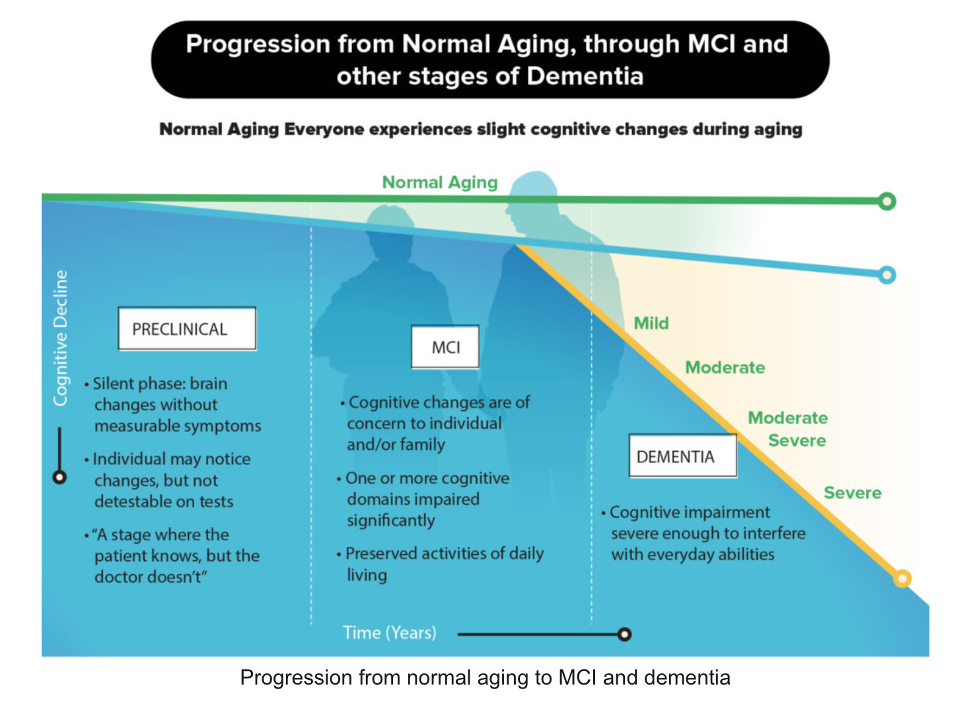
Normal Aging: Some changes in cognition are a natural part of aging. These may include slightly slower processing speed, occasional word-finding difficulty, and a reduced ability to multitask. For example, learning a new language at age 60 may take more time than it did in childhood. Importantly, in healthy aging, overall cognitive function remains well preserved and does not interfere with independence, decision-making, or daily activities—even well into advanced age.
Subjective Cognitive Decline (SCD): The curve begins to diverge. The individual notices memory slips (e.g., forgetting names or appointments more often), but they still perform well on standard clinical tests. At SageMD we use a more comprehensive cognitive testing platform to pick up early cognitive changes, so cognitive health can be addressed and optimized before irreversible deficits develop. At this stage, there is the greatest potential to change the trajectory of one’s cognitive health if appropriate interventions are implemented according to the person’s unique health needs.
Mild Cognitive Impairment (MCI): The decline accelerates. Memory or thinking problems become measurable on tests and noticeable to others. However, the person can still manage their daily life (paying bills, shopping, etc.). Some people with MCI never go on to develop dementia, but some do. Taking a proactive and comprehensive approach to addressing the personal in a holistic manner can help address insidious underlying root causes to prevent further decline and potentially improve cognitive function.
Dementia: The curve drops significantly. Cognitive impairment becomes severe enough to interfere with daily life and independence. There are no cures or treatments which modify the trajectory of the disease, which becomes progressively debilitating. Although, much less likely to have reversible improvements, it is never too late to take a holistic approach to cognitive health and attempt to preserve function.